Historic Site and Historical Park · NPS · IN
George Rogers Clark National Historical Park
Photo: NPS Photo / Frank Doughman, Vincennes Celebrates Independence Day
Alerts and conditions
Information George Rogers Clark NHP in the Eastern Time Zone
George Rogers Clark National Historical Park is located in the Eastern Time Zone. The memorial closes 15 minutes before the visitor center.
Overview
The British flag would not be raised above Fort Sackville Feb. 25, 1779. At 10 A.M., the garrison surrendered to American Colonel George Rogers Clark. His American army, aided by French residents of the Illinois country, had marched through freezing floodwaters to gain this victory. The fort’s capture assured United States claims to the frontier, an area nearly as large as the original 13 states.
From the National Park Service
History
The designation history for this site (every law, proclamation and order, and the administration behind each) is being researched and checked by the Library’s historians.
What to see and do
Activities
- Astronomy
- Fishing
- Food
- Picnicking
- Guided Tours
- Self-Guided Tours - Walking
- Hands-On
- Arts and Crafts
- Living History
- Historic Weapons Demonstration
- Junior Ranger Program
- Park Film
- Museum Exhibits
- Shopping
- Bookstore and Park Store
Plan your visit
Hours
Visitor Center: The George Rogers Clark National Historical Park Visitor Center is a great place to start your visit. The visitor center contains a small exhibit area, bookstore, and restrooms. The 30-minute introductory movie called "Long Knives" shares the backstory of George Rogers Clark and his campaign during the American Revolution. Before going to the Clark Memorial, check-in with a ranger at the visitor center.
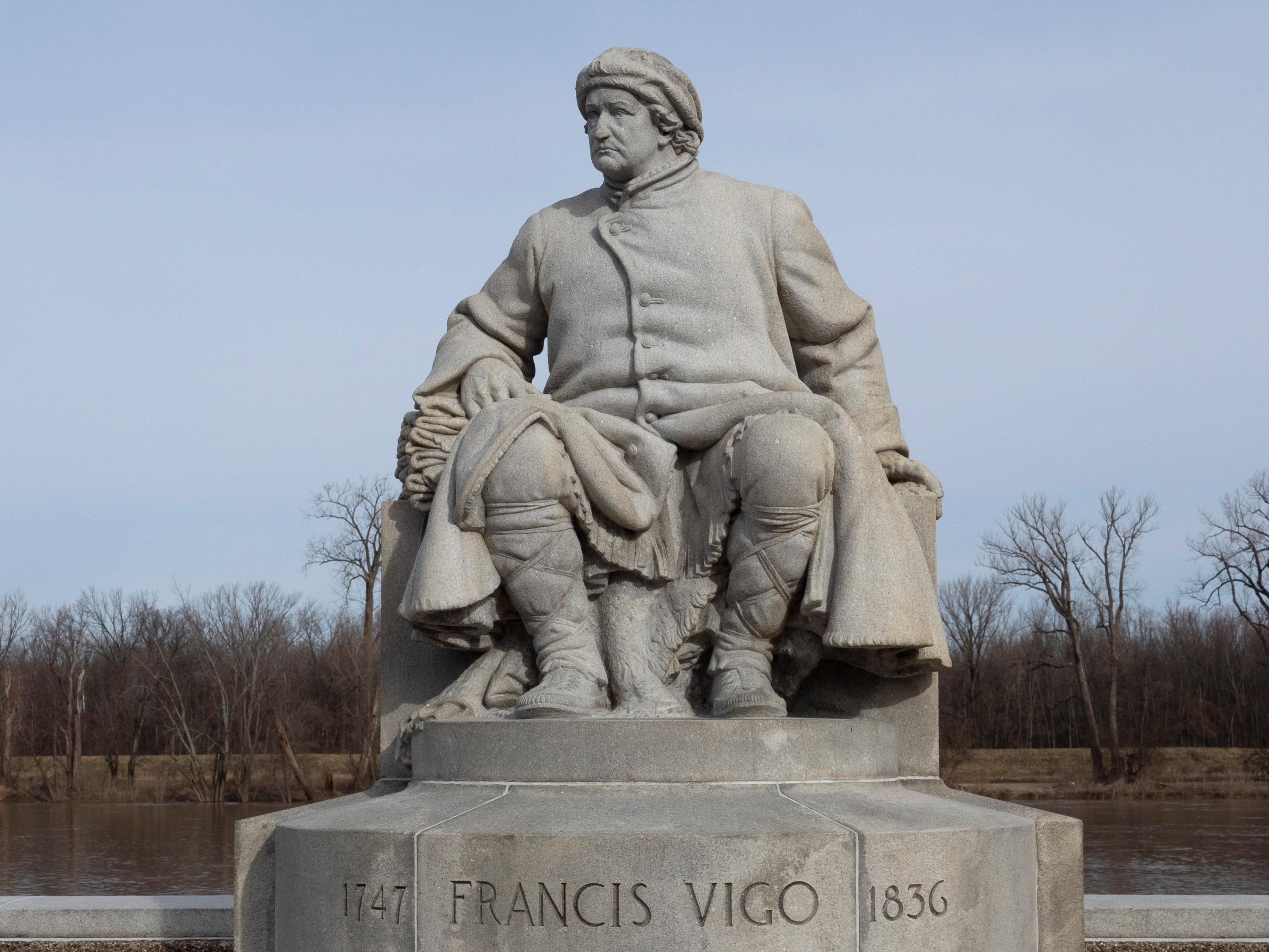
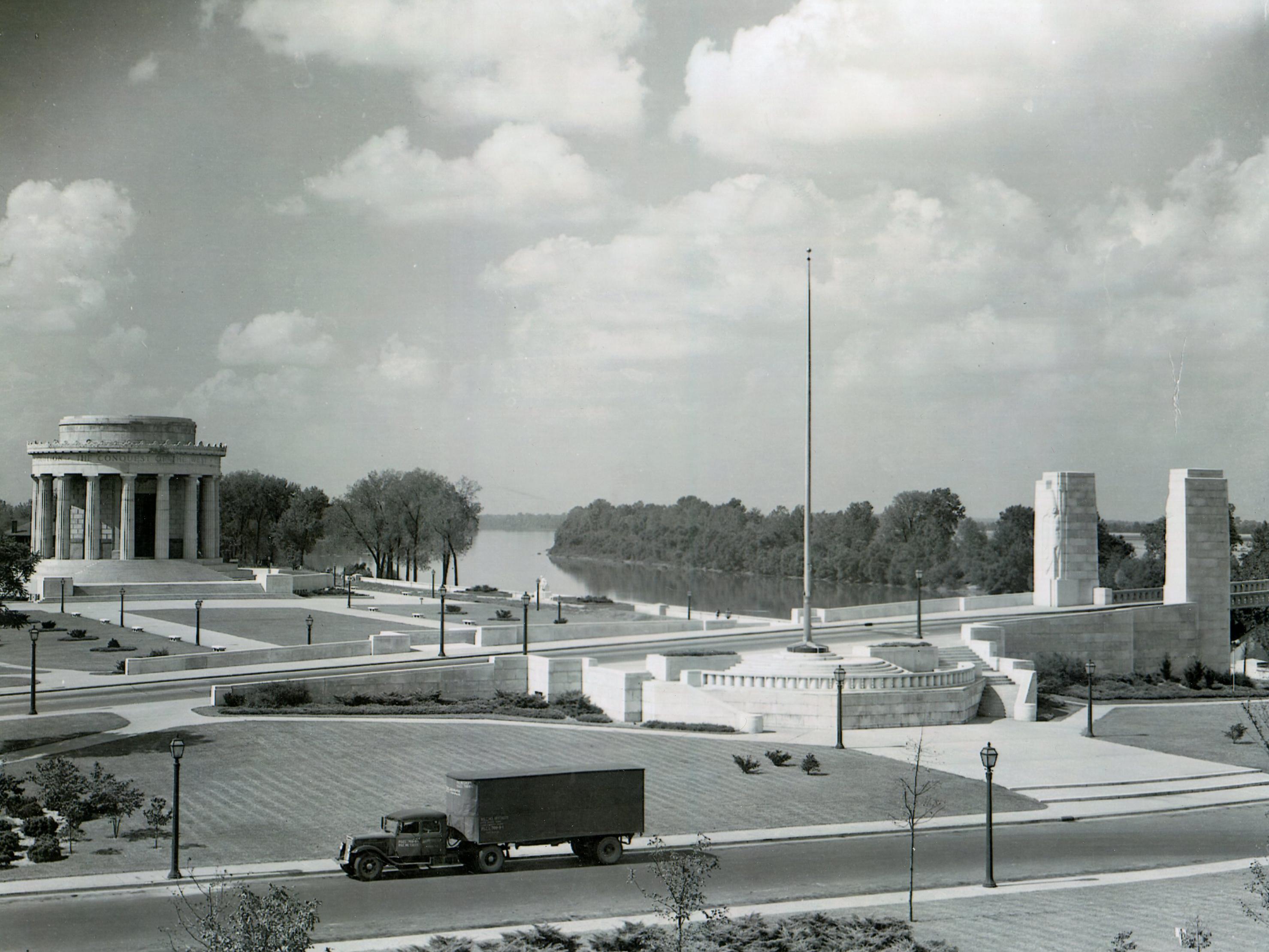
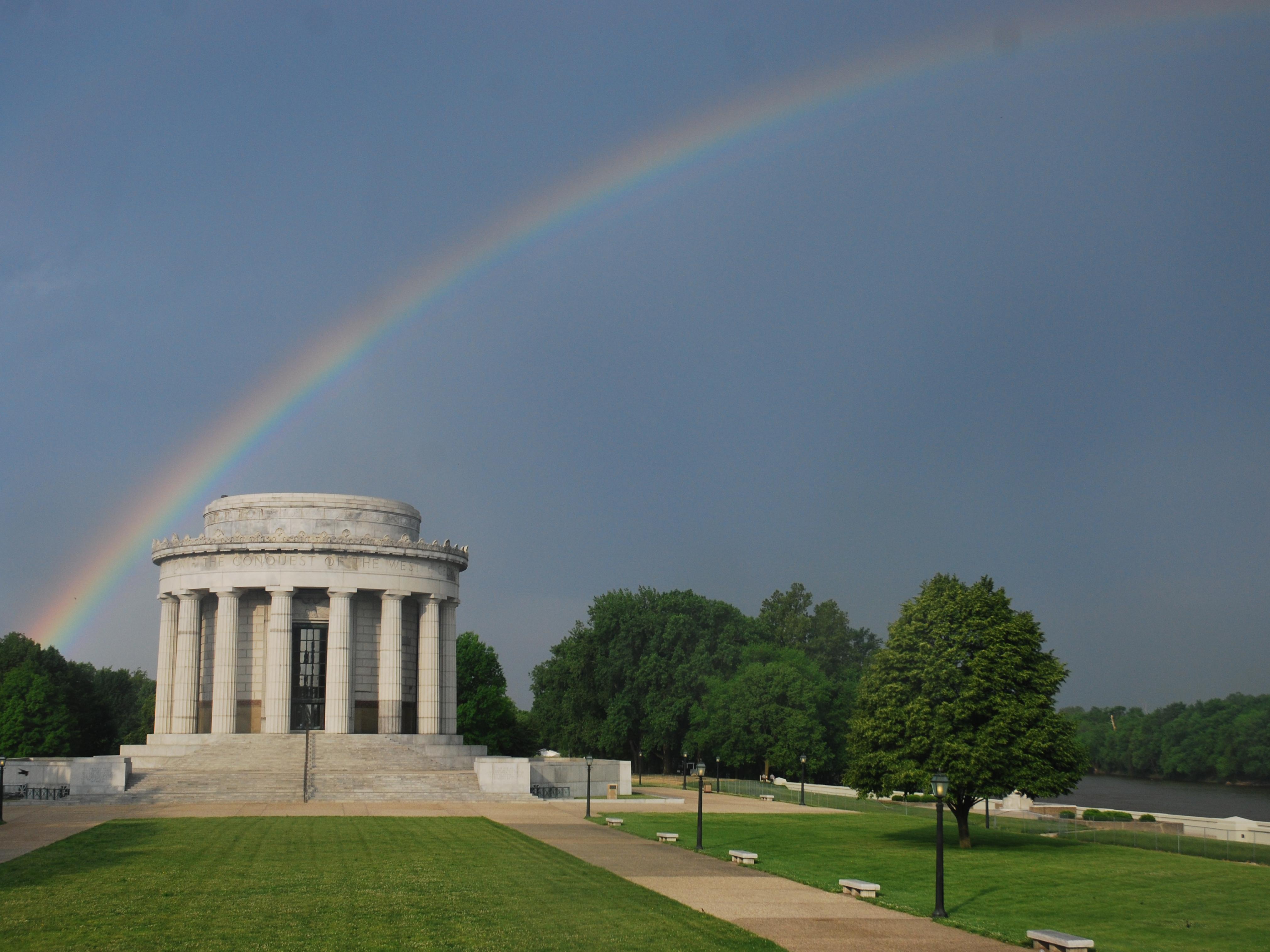
Memorial Building: The memorial is opened on request. Please check with rangers at the visitor center to ensure that the memorial is open before ascending the 33 steps to the door. The memorial building was designed by architect Frederic C. Hirons and constructed by the WR Heath company between 1931 and 1933. Inside the memorial are seven (7) murals by artist Ezra Winter, a bas-relief by Joseph Kiselewski, and a statue of George Rogers Clark by Hermon Atkins MacNeil.
Outdoor Areas: The Outdoor areas of the park except the Parking area.
Parking Area: The entrance to the parking area is on the corner of 2nd and Nicholas Streets in Vincennes IN
Getting there
The George Rogers Clark National Historical Park is located within the city of Vincennes, Indiana. Evansville is approximately 50 miles to the south and Terre Haute is approximately 50 miles to the north. Highway 41 provides good roads from the north or south. Highway 50 provides access from the east and west. From Hwy 50 east and west or from Hwy 41 from the north use the 6th Street exit. On Hwy 41 from the South use the Willow Street exit. From there follow the blue directional signs for the park.
Visitor centers
Weather
The weather in the area is quite typical for the Midwest. The average temperature for the winter months is in the mid 30s, but the summers can often be hot and humid with temperatures reaching into the 90s.
Phone: 8128821776
Whose lands these are
These lands are the ancestral and present-day homelands of Native nations. A section on whose lands these are is being prepared with tribal review. In the meantime, Native Land Digital offers a starting point.
Photos
Pair it with
- Patoka River National Wildlife Refuge FWS · 23 miles
- Lincoln Boyhood National Memorial NPS · 48 miles
- Green River National Wildlife Refuge FWS · 56 miles
- Hoosier National Forest USFS · 56 miles
- Muscatatuck National Wildlife Refuge FWS · 95 miles
- Shawnee National Forest USFS · 96 miles