National Park · NPS · FL · Roosevelt connection
Dry Tortugas National Park
Photo: NPS Photo / Brett Seymour, Night sky at the Dry Tortugas
Alerts and conditions
Park Closure Seasonal Closure: Bush Key
Most of Bush Key is now open to the public. To protect nesting frigatebirds, a small area on the north side of Bush Key, all of Long Key, and all vegetation remains closed until further notice.
Park Closure Sections of moat wall closed until Winter 2026
Sections of the moat wall that were damaged by Hurricanes Helene and Milton (2024) are undergoing repair and reinforcement. For your safety, please follow posted signage and do not cross any barricades.
Park Closure Current Alerts and Conditions
Be sure to review the Alerts and Conditions below before and during your visit for additional, up-to-date information on closures, cautions, and other current park conditions.
Information Migrant Notice
Like elsewhere in the Florida Keys, we have seen an increase in Cuban migrants arriving by boat from Cuba and landing on the islands of Dry Tortugas National Park. You may observe migrant landings at the park and visitor areas may be impacted.
Caution Garden Key Harbor Light
Vessel operators - the Garden Key Harbor Light is undergoing repairs and is extinguished. At this time it is unknown when the light will again be illuminated.
Weather Coastal Flood Statement issued November 8 at 11:08AM EST until November 9 at 5:00AM EST by NWS Key West FL
* WHAT...Minor saltwater flooding.
* WHERE...The Florida Keys.
* WHEN...Through early Monday morning.
* IMPACTS...Minor saltwater flooding of low elevation streets
and lots is likely. Some storm drains will overflow, and some
seawalls and docks will be overtopped. Boaters can expect less
clearance under fixed bridges. Motorists should remember that
persistent puddles around the times of high tide are almost
certain to contain a mix of saltwater.
What to do: Do not drive through flooded roadways.
Read the full alert · Until Nov 9, 2026, 10:00 AM
Overview
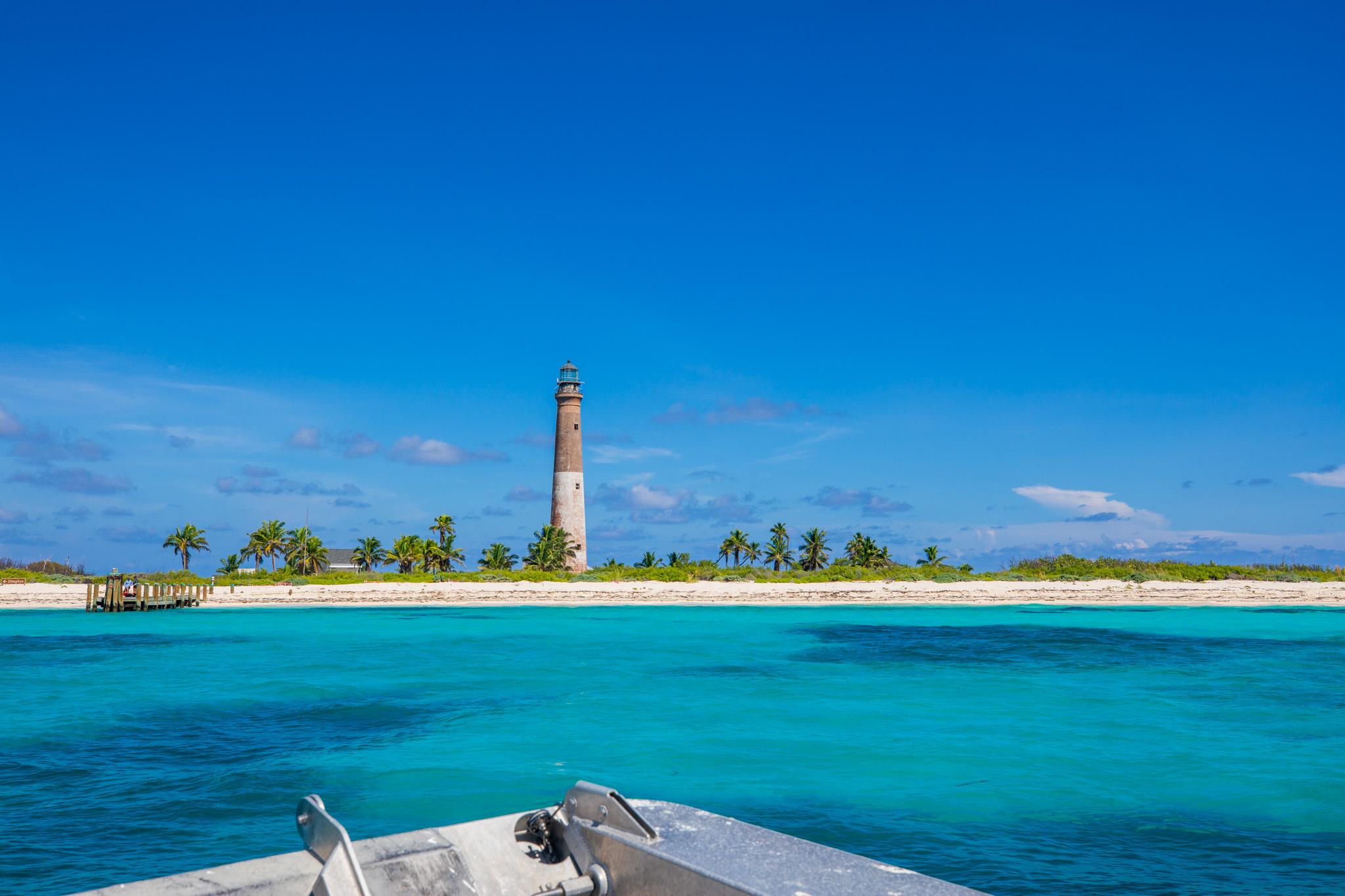
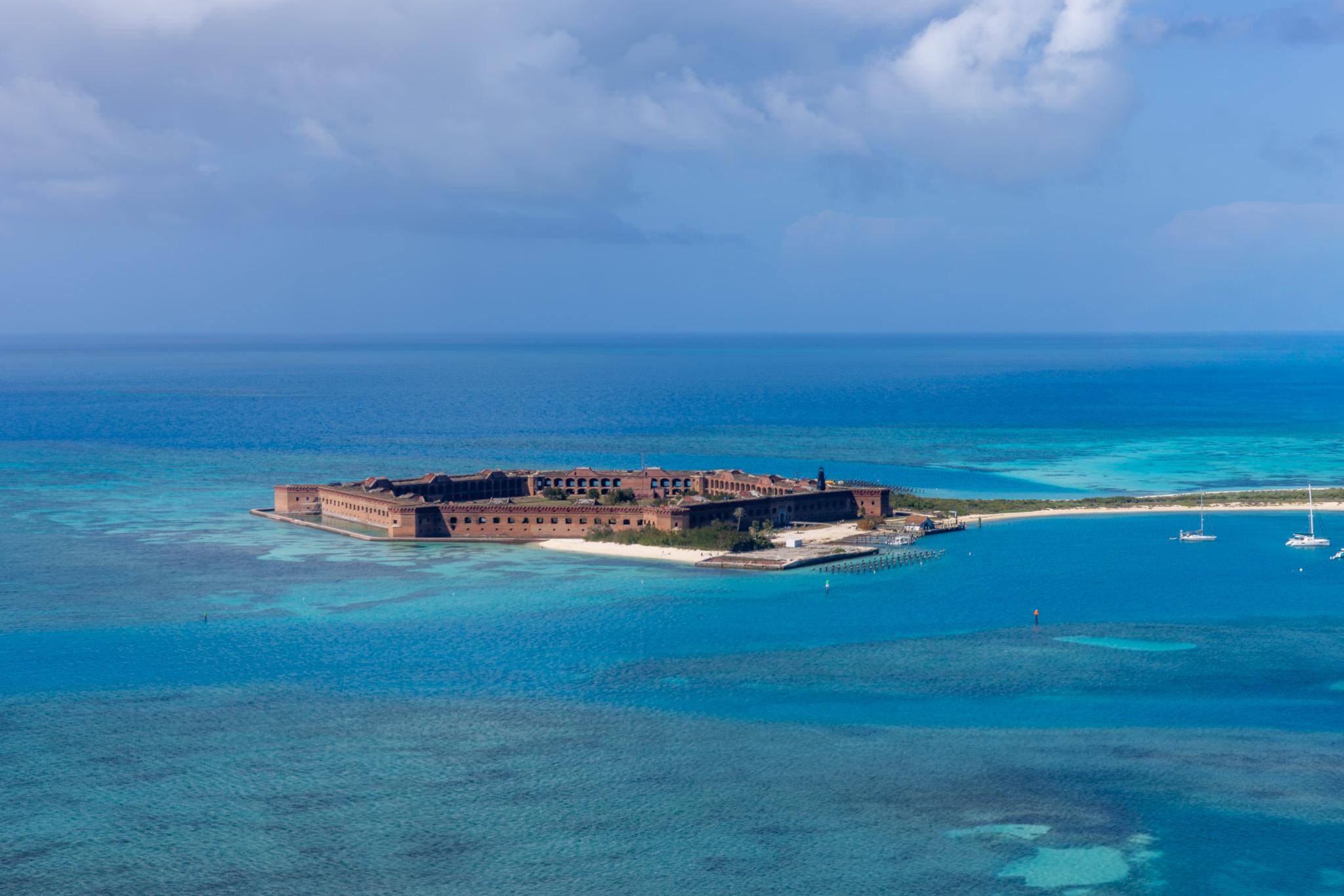
Almost 70 miles (113 km) west of Key West lies the remote Dry Tortugas National Park. This 100-square mile park is mostly open water with seven small islands. Accessible only by boat or seaplane, the park is known the world over as the home of magnificent Fort Jefferson, picturesque blue waters, superlative coral reefs and marine life, and the vast assortment of bird life that frequents the area.
From the National Park Service
History
The designation history for this site (every law, proclamation and order, and the administration behind each) is being researched and checked by the Library’s historians.
The Roosevelt connection
Protected by T.R.
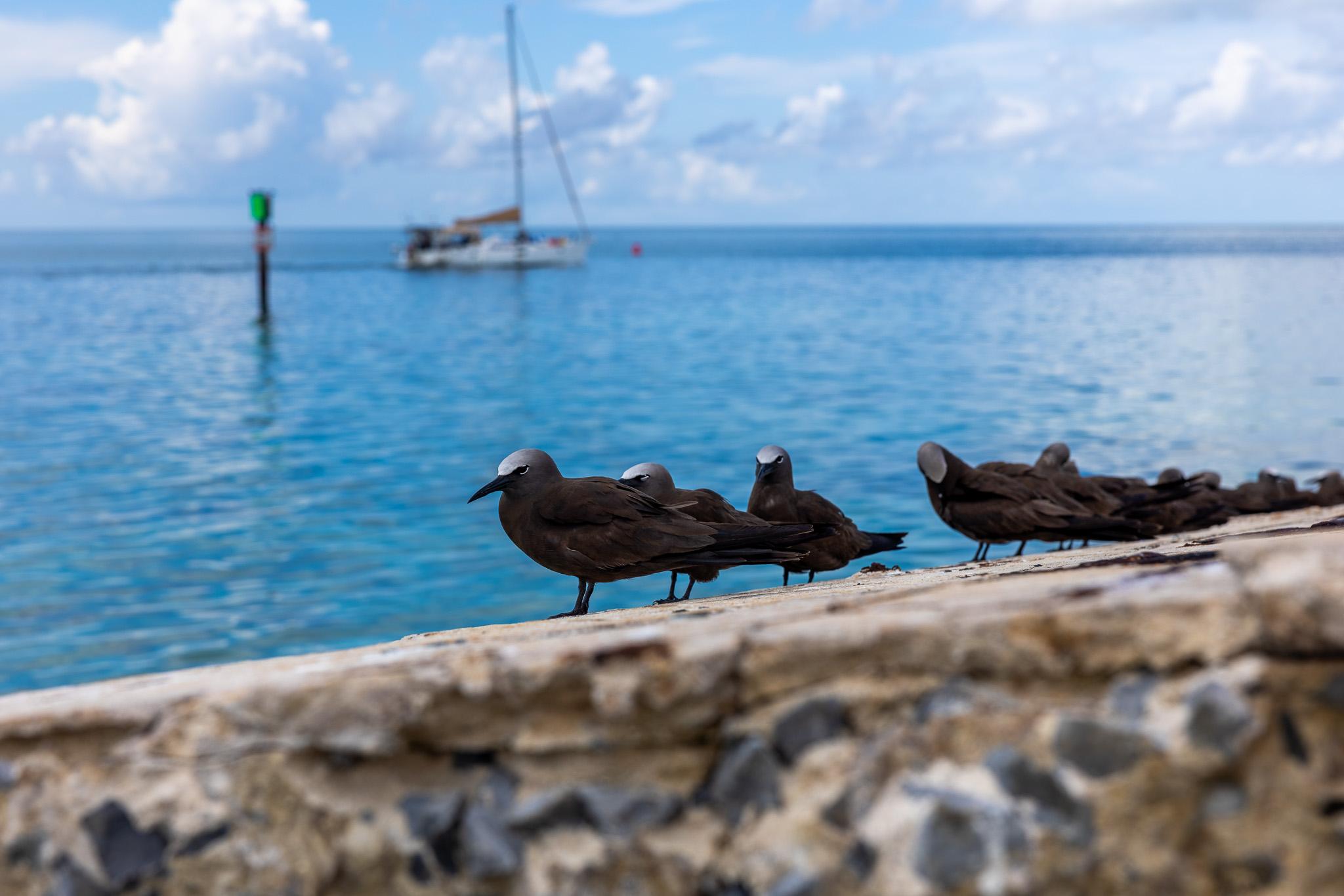
- April 6, 1908: as President, Theodore Roosevelt set aside Tortugas Keys Reservation (federal bird reservation). The Dry Tortugas, famous for huge colonies of sooty and noddy terns, became part of Fort Jefferson National Monument in 1935 and are now a national park.
archive.org · standardebooks.org · en.wikisource.org · Roosevelt’s Public Lands
His proclamations and orders
- April 6, 1908: Executive Order 779, “Establishing Tortugas Keys Reservation in Florida as Preserve and Breeding Ground for Native Birds.” Today’s site includes land from this document. Proclamation 2112 replaced the bird reservation with Fort Jefferson National Monument in 1935; the monument became a national park in 1992.
Executive Order 779 in Theodore Roosevelt’s Executive Orders and Proclamations
What to see and do
Activities
- Astronomy
- Stargazing
- Boating
- Boat Tour
- Camping
- Fishing
- Guided Tours
- Hands-On
- Volunteer Vacation
- Paddling
- Junior Ranger Program
- SCUBA Diving
- Snorkeling
- Swimming
- Wildlife Watching
- Birdwatching
- Shopping
- Bookstore and Park Store
Plan your visit
Hours
Dry Tortugas: The Dry Tortugas is open 24 hours, 7 days a week. This includes holidays.
Fees and passes
- Entrance - Per Person — $15.00
The America the Beautiful pass covers entrance fees at federal recreation lands across all four agencies.
Getting there
Dry Tortugas National Park is one of the most remote parks in the National Park System. Located approximately 70 miles west of Key West it is accessible only by a daily concession ferry, private boats, charter boats, or seaplane.
Visitor centers
- Garden Key Visitor Center
- Florida Keys Eco-Discovery Center - Closed until further notice (11/6/2026)
Campgrounds
- Garden Key Campground (8 sites)
Weather
The climate in the Dry Tortugas is subtropical, which basically means that it has warm and tropical weather in the range of 60°F to 90°F. The two main seasons are the winter stormy season from December through March which is windier and sees rougher seas, and the summertime tropical storm season from June through November where there is a higher chance of isolated storms. During the summers it is hot and humid. During the winter the temperature is milder and drier.
Phone: 3052427700
Whose lands these are
These lands are the ancestral and present-day homelands of Native nations. A section on whose lands these are is being prepared with tribal review. In the meantime, Native Land Digital offers a starting point.
Photos


Pair it with
- Key West National Wildlife Refuge FWS · 55 miles
- Great White Heron National Wildlife Refuge FWS · 86 miles
- National Key Deer Refuge FWS · 94 miles
- Ten Thousand Islands National Wildlife Refuge FWS · 120 miles
- Everglades National Park NPS · 135 miles
- J. N. "ding" Darling National Wildlife Refuge FWS · 135 miles